
Fruit purées are not limited to pastry making and ice cream production. In savory cooking, they play a specific role: balancing richness, adding acidity, and lending a distinctive aromatic signature to a sauce. Fish, poultry, and foie gras are three categories of ingredients that pair particularly well with fruit. The key, however, lies in choosing the right purée, using the correct amount, and employing the proper technique.
Which purees work in savory sauces, and why fruit acidity balances richness
In savory cooking, fruit isn’t there to add sweetness; it’s there to provide a sharp counterpoint.
Fish in *beurre blanc*, poultry in a reduced jus, and pan-seared foie gras all share one thing in common: a high fat content. The natural acidity of a fruit purée cuts through this richness and lightens the mouthfeel. It works on the same principle as a squeeze of lemon on *sole meunière*, but offers a far more complex flavor profile.
Tart, intense fruits work better in savory sauces than sweet ones. Passion fruit is the most versatile: its vibrant acidity and tropical aroma pair just as well with fish as with poultry. Mango, being sweeter, suits dishes where the goal is roundness rather than a sharp edge. Citrus fruits like yuzu and calamansi blend well into emulsified sauces for fish. Raspberry and blackcurrant work beautifully with duck and foie gras, where their fruity acidity plays off the animal fat.
Very sweet or mild purées—such as pear or banana—can easily tip a dish toward dessert territory during cooking. Purées with high levels of added sugar will throw a savory sauce off balance the moment heat is applied.
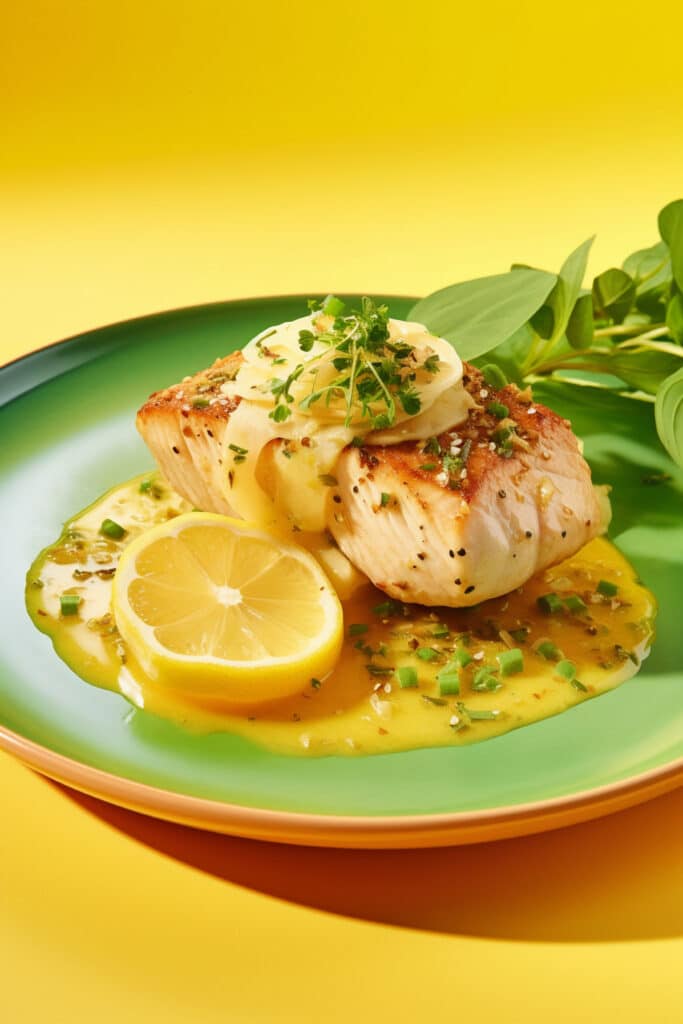
3 concrete pairings tested in a professional kitchen
- Passion fruit purée with sea bass fillet. The sauce is made by reducing fish stock and adding a knob of butter, with 10% passion fruit purée stirred in off the heat. The fruit’s acidity lifts the butter without overpowering it. The result is a vibrant, light sauce that reads clearly on the menu.
- Mango purée with duck breast. The mango is incorporated into a reduction made with honey and balsamic vinegar. It adds roundness and extends the flavor of the duck without overwhelming it. The proportion remains low: 8 to 10% of the sauce’s total weight.
- Raspberry purée with pan-seared foie gras. This is the most classic pairing of the three. The raspberry’s acidity cuts through the richness of the foie gras, creating an immediate contrast on the palate. A quick reduction using veal stock and raspberry purée yields a glossy, rich, and highly aromatic sauce. Blackcurrant works on the same principle, producing a deeper, less fruit-forward result.
How to incorporate fruit purée into a savory sauce without making it too sweet
Fruit purée in a savory sauce tends to veer into sweetness for three reasons: using too much, cooking it for too long, or using a purée with excessive added sugar.
Cooking concentrates the fruit’s natural sugars. If added at the start and reduced for a long time, the purée essentially turns into jam. It should be added at the very end—off the heat or over very low heat—just long enough to blend it into the sauce; two to three minutes is sufficient.
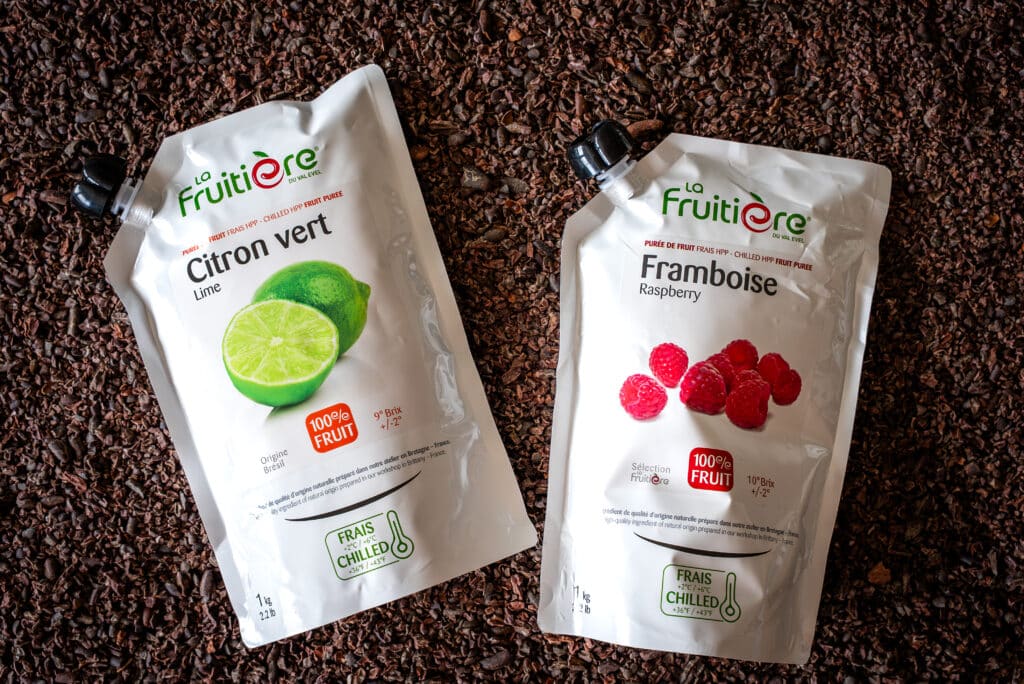
Choosing the right product is crucial. Purées with no added sugar, such as those from La Fruitière du Val Evel, offer better control in savory cooking. This allows the chef to manage the sweet-acid balance without being constrained by the added sugar found in mass-market products.
Adding a splash of lemon juice or high-quality vinegar at the end can rebalance the flavor profile if the purée has made the dish slightly too sweet. This quick adjustment brings the sauce back to a savory focus.
Combining the purée with a reduced stock, rather than water or cream, also helps limit the perception of sweetness. The stock adds umami and depth, counterbalancing the fruit’s natural sweetness.
Dosage guidelines for savory cooking: practical benchmarks
In savory cooking, fruit purée should make up 8–15% of the sauce’s total weight. Exceeding this range allows the fruit to overpower the dish, while using less causes the flavor to vanish during cooking.
For fish, use 8–10% passion fruit or citrus purée in a beurre blanc or emulsion. Fish is delicate; too much fruit masks its natural subtlety.
For poultry, use 10–12% mango or passion fruit purée in a reduced jus. Poultry handles fruit better than fish does and accommodates bolder pairings, such as mango-ginger or passion fruit-lime.
For foie gras, use 10–15% raspberry or blackcurrant purée in a veal stock reduction. The rich fat of the foie gras absorbs the fruit’s acidity, allowing for a higher ratio without unbalancing the dish.
For duck, use 10–12% mango or blackcurrant purée in a jus with balsamic vinegar. Duck is the most versatile of the four; its robust, slightly metallic flavor profile pairs naturally with both red berries and exotic fruits.
In all cases, taste before adjusting. Factors such as the degree of stock reduction or the acidity of the purée (which varies by season) will alter the final result. These dosage guidelines are a starting point, not an absolute rule.
La Fruitière du Val Evel fruit purées: a versatile ingredient for all kinds of cooking
Using fruit in savory dishes isn’t just a trend; it’s a technique. The natural acidity of passion fruit, raspberry, or mango purée does for a sauce what lemon does for fish: it balances flavors, cuts through richness, and adds vibrancy.
The rules are simple: choose a purée with no added sugar; incorporate it off the heat or at the very end of cooking; aim for 8–15% of the sauce’s total weight; and taste and adjust as you go.
Fish, poultry, duck, and foie gras all pair beautifully with fruit, provided these guidelines are followed. La Fruitière du Val Evel’s no-added-sugar purées give you the control needed to craft these flavor pairings with precision.
Our fruit purées are available as fresh HPP products in 1kg pouches and as frozen 1kg trays (as well as in larger formats). Interested? Get in touch! 🙂