In confectionery, temperatures, measurements, and raw materials must be precise. When incorporating fruit purée into fruit paste, marshmallow, or caramel, every variable counts! In this guide, discover the technical guidelines for using La Fruitière du Val Evel purées in confectionery with precision and consistency.
Fruit jellies, marshmallows, caramels: how to adjust the purée dosage according to the recipe
Each type of confectionery has its own technical constraints, and the puree dosage cannot simply be transferred from one recipe to another without adjustment. Here is why:
- For fruit jellies, the puree forms the base of the recipe, typically accounting for 50% to 60% of the total weight. It provides the flavor, color, and some of the pectin needed for gelling. A puree naturally rich in pectin—such as La Fruitière du Val Evel’s raspberry or blackcurrant—reduces the need for added pectin. Conversely, a puree lower in pectin, like mango or passion fruit, requires a larger external addition to achieve a clean set.
- In marshmallows, puree makes up 20% to 30% of the total weight. It replaces part of the sugar syrup and provides fruity flavor. Exceeding 30% introduces too much natural moisture, interfering with the gelatin’s aeration and resulting in a soft marshmallow that fails to hold its shape. Dropping below 20% causes the flavor to be lost during cooking.
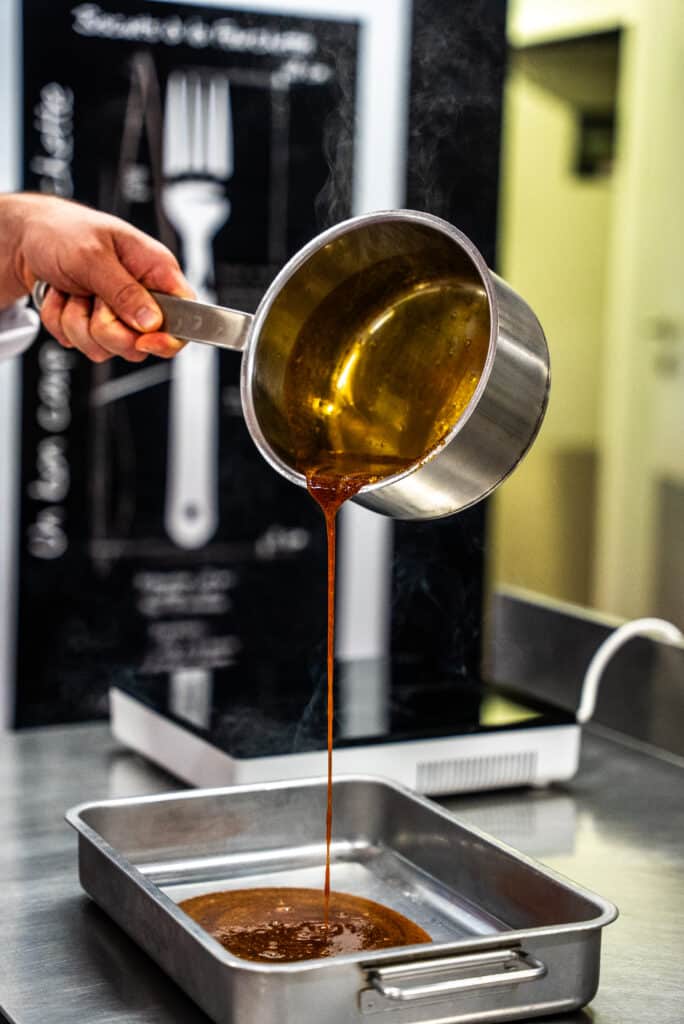
- For fruit caramels, the puree is incorporated at the end of the cooking process, once the caramel has been “de-cooked” (stopped from cooking further). It accounts for 15% to 20% of the total weight. An acidic puree—such as La Fruitière du Val Evel’s passion fruit or raspberry—cuts through the richness of the butter and cooked sugar, creating a vibrant caramel that is less cloying than a classic version. A milder puree, like mango, adds roundness without pronounced acidity.
Choosing the right purée for confectionery: acidity, sugar content, and heat stability
In confectionery, the choice of purée is not merely a matter of flavor; it is a technical decision.
3 factors to consider
- Acidity plays a dual role: it adds aromatic depth and interacts with gelling agents. An acidic purée—such as La Fruitière du Val Evel’s raspberry, blackcurrant, or passion fruit—activates pectin more quickly than a mild purée. In fruit jellies (pâtes de fruits), this activation accelerates setting and yields a firmer texture for the same amount of pectin. In caramel, acidity cuts through the cooked sugar, preventing the cloying sensation of an overly heavy confection.
- The purée’s natural sugar content alters the recipe’s sweetness balance. La Fruitière du Val Evel’s no-added-sugar purées offer a distinct advantage here: the confectioner can precisely control the total sugar content without the complications of industrial added sugars skewing calculations. A high-Brix mango purée used in an already very sweet caramel requires a reduction in added sugar to avoid masking the fruit’s flavor.
- Cooking stability is the third factor. Passion fruit and raspberry flavors are volatile; these purées should be incorporated at the end of the cooking process to preserve their intensity. Mango and blackcurrant are more heat-stable and can withstand longer cooking times without losing their flavor profile.
Mastering the cooking process: temperatures, critical points, and pitfalls to avoid
Cooking is the stage where everything can go wrong. A poorly incorporated purée or an improperly controlled temperature alters the texture, setting, and aroma of the final product.
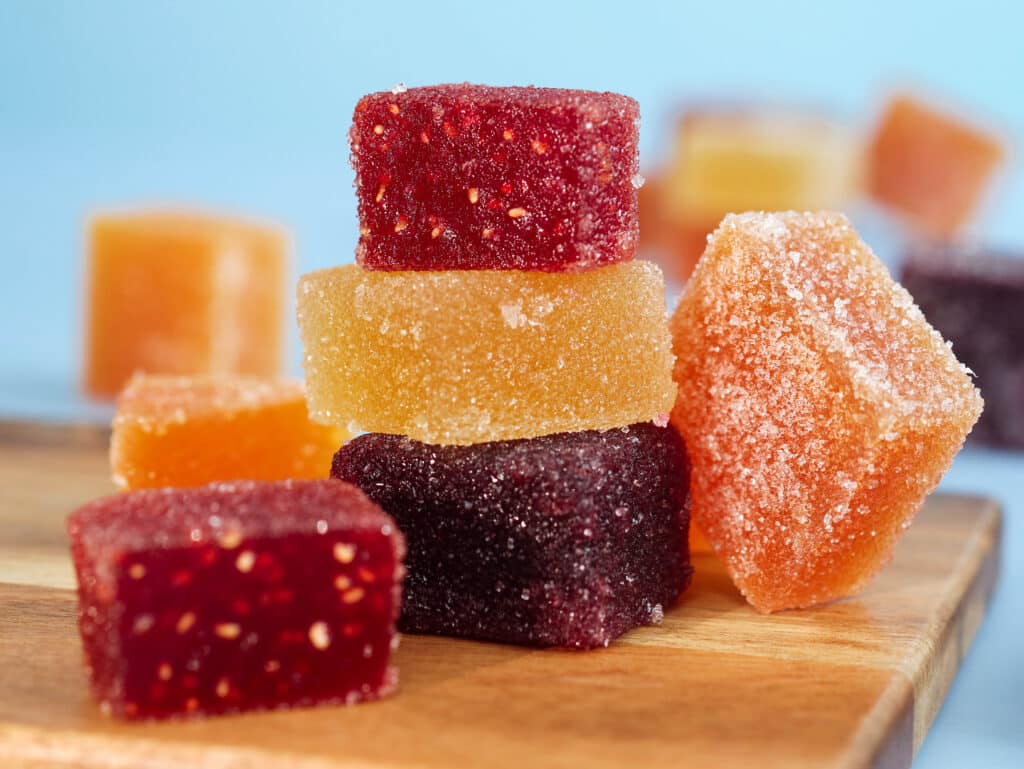
- When making fruit paste, the mixture is cooked to between 106°C and 108°C. This is the temperature at which pectin sets. Below this range, the paste will not set; above it, it becomes too firm and brittle. The fruit purée is combined with the sugar and pectin at the start of the cooking process and cooked for an extended period to reduce the fruit’s natural moisture content. A more acidic purée—such as raspberry or blackcurrant from La Fruitière du Val Evel—reaches the setting point faster than mango purée. Monitoring the thermometer is essential.
- For marshmallows, the purée is not cooked. It is incorporated while lukewarm into the aerated mixture once the gelatin has been whipped up. If the purée is too hot, it melts the gelatin and causes the structure to collapse; if it is too cold, it creates lumps and disrupts the texture. The ideal incorporation temperature is between 25°C and 30°C.
- With fruit caramel, the main pitfall lies in the incorporation step. Pouring cold purée into hot caramel triggers a violent reaction: the hot sugar mixture bubbles up and splatters. The purée must be heated to at least 60°C before being gradually incorporated off the heat, while stirring constantly.
Why fruit purée yields a cleaner, more intense result than flavoring or juice
In confectionery, there are three options for adding fruit flavor: artificial flavoring, fruit juice, and fruit purée.
3 options
- Artificial flavoring provides an immediate but one-dimensional fruity note; it smells like fruit but lacks its complexity. On the palate, it fades quickly, sometimes leaving a noticeable chemical aftertaste. It plays no technical role in the recipe: it does not activate pectin, provide natural color, or alter the texture.
- Fruit juice offers a more natural profile but is less concentrated. Its high water content disrupts the recipe’s moisture balance—particularly in fruit jellies and caramels. The quantity must be reduced to limit moisture, which consequently diminishes the final flavor intensity.
- La Fruitière du Val Evel purée concentrates the fruit without the excess water found in juice. It delivers flavor, color, natural pectin, and fruit solids in a single ingredient. Its consistent Brix level from one tub to the next ensures reproducible results in production. Whether used in fruit jellies, marshmallows, or caramels, the purée provides an intensity of flavor that neither artificial flavoring nor juice can match.
Conclusion
In confectionery, every parameter counts: dosage, incorporation temperature, the acidity of the purée, and its natural sugar content. Mastering these variables ensures a fruit paste that sets cleanly, a marshmallow that holds its shape, and a fruity caramel that retains its aroma right up to the moment of tasting.
La Fruitière du Val Evel’s no-added-sugar purées give the confectioner total control over their recipe. There is no added sugar to skew calculations, the Brix level remains consistent from one tub to the next, and the natural aromatic intensity is something that artificial flavorings and fruit juices simply cannot replicate.
Confectionery Recipes
Lychee fruit paste, calamansi marshmallow, strawberry caramel: these three confections showcase the results achievable in a professional kitchen using high-quality purée—properly balanced and expertly cooked.
The La Fruitière du Val Evel range is available in frozen and fresh (HPP) formats—with no added sugar—in sizes suited to professional volumes. Contact us for more information 🙂