The mango is a generous fruit. Yet, not all mango purées are created equal. Behind every successful recipe lies a careful choice of raw ingredients. La Fruitière du Val Evel’s mango purée combines two complementary varieties: the Alphonso—a global benchmark for its aroma—and the Chato de Ica, grown in Peru for its rounded mouthfeel. This blend is no accident; it is a technical decision designed to ensure the best possible results in your kitchen or laboratory.
What each variety offers
- The Alphonso is the benchmark mango for pastry chefs and ice cream makers. Grown primarily in India, it stands out for its intense fragrance and deep yellow-orange color. On the palate, it is sweet with a characteristic, slight resinous note. Its aroma is instantly recognizable; it is what gives the purée its signature scent and color.
- The Chato de Ica is lesser-known and hails from the Ica Valley in Peru. Its flesh is dense, low in fiber, and very sweet. It adds roundness and body on the palate without the aromatic intensity of the Alphonso. On its own, it lacks character; however, when paired with the Alphonso, it balances the latter’s potency and extends the flavor on the palate.
The Alphonso leads the way, followed by the Chato de Ica. The result is a purée that opens with aromatic intensity and finishes with a round, fruity texture—free of any residual acidity or bitterness.
Why does a blend yield a more balanced result than a single-variety purée?
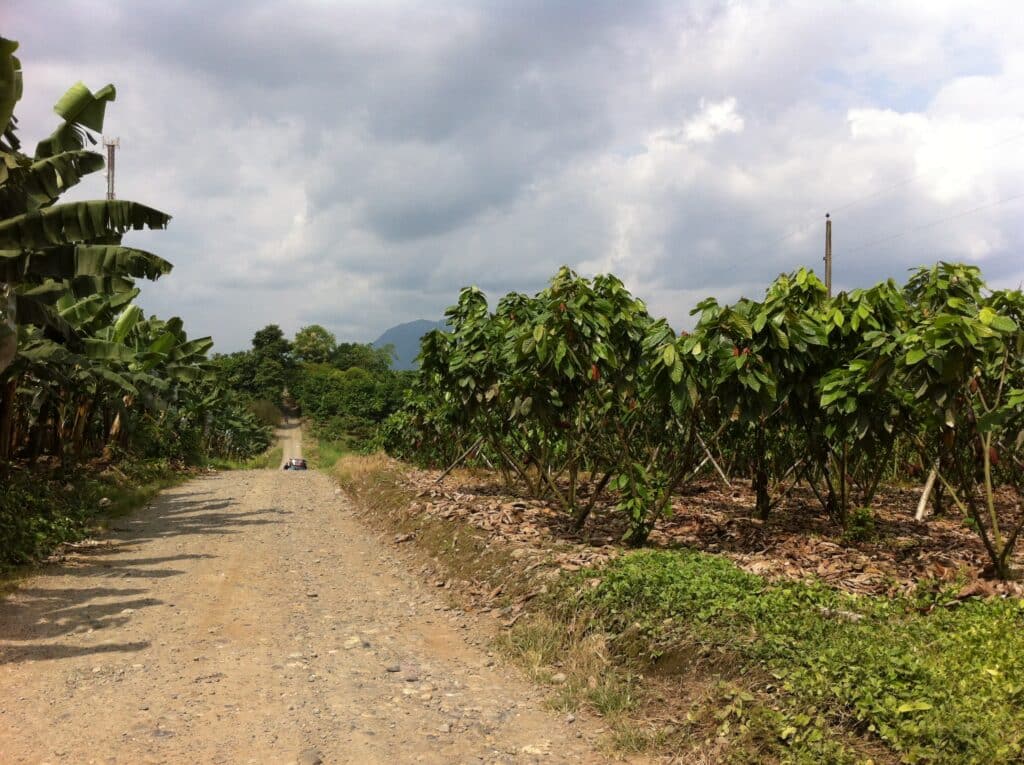
A single-variety purée has its limitations. It reflects the qualities of a single fruit, but also its flaws.
- The issue with single-variety purées: Alphonso on its own is potent but short-lived on the palate; its aroma dominates the initial impression but then fades away. Chato de Ica on its own is rounded but lacks character; it adds volume without a strong aromatic identity. In both cases, the purée lacks complexity.
- The solution offered by blending: Combining the two varieties is akin to the work of a wine blender. You take the best attributes of each fruit to build a complete profile. Alphonso contributes the aroma and color, while Chato de Ica provides texture and persistence. The result holds up better in heated, frozen, or emulsified preparations.
- A practical advantage in the kitchen: A blended purée offers greater stability from one season to the next. Natural variations in one variety are balanced out by the other. The flavor profile remains consistent between a batch from January and one from August. For professionals working in volume, this guarantees consistency on the menu.
How to use this purée in pastry, ice cream making, and mixology
- Pastry: Mango purée works beautifully in mousses, inserts, and glazes. Its rich, vibrant profile holds up well in multi-layered entremets. A mango-lychee insert within a white chocolate entremet is a particularly successful pairing: the mango provides body, while the lychee adds floral lightness. In a Yule log, the mango-hazelnut combination—showcased by La Fruitière du Val Evel—perfectly illustrates the purée’s ability to complement rich, rounded flavors. Regarding dosage, using 15–20% purée in a mousse delivers a fruity presence without becoming overpowering.
- Ice Cream Making: Alain Chartier, an M.O.F. (Meilleur Ouvrier de France) ice cream maker, has developed a high-fruit-content sorbet using this purée. The blend of Alphonso and Chato de Ica varieties yields a deep yellow-orange hue that remains stable after churning. The fleshy profile of the Chato de Ica stabilizes the texture, while the Alphonso maintains aromatic intensity at low temperatures.
- Mixology: Mango serves as a natural base for tropical cocktails and mocktails. Its fruity sweetness pairs well with a splash of lime, which lifts the flavor profile without being harsh. Whether in a margarita, punch, or mocktail, it adds color, texture, and aromatic intensity. La Fruitière du Val Evel’s chilled HP range, packaged with a pouring cap, allows for easy, direct dosing at the bar without extra handling.
Flavor pairings that work with mango
The mango is a versatile fruit. It pairs well with many ingredients, but certain combinations are particularly effective.
- With fruit: Passion fruit is the most obvious pairing. Its sharp acidity contrasts with the mango’s roundness, creating an instantly recognizable aromatic tension. Coconut adds sweetness and richness, resulting in a more enveloping flavor profile. Lychee contributes a floral note that extends the Alphonso’s fragrance. Pineapple, being more acidic and fibrous, adds vibrancy to frozen desserts.
- With spices: Ginger is the most effective pairing; it awakens the mango without overpowering it. Cardamom introduces a smoky, camphor-like note that complements the fruit’s tropical character. Vanilla, a more classic choice, rounds out the flavor profile and is ideal for creations aimed at a broad audience.
- With chocolate: White chocolate amplifies the mango’s sweetness and color. Milk chocolate creates a delicious, crowd-pleasing combination. High-percentage dark chocolate works through contrast: its bitterness cuts through the fruit’s sweetness, adding depth to ganaches or entremets.
- Pairings to avoid: Highly acidic red fruits, such as redcurrants or sour cherries, overwhelm the mango’s flavor profile. Large amounts of yellow lemon mask the Alphonso’s aroma. Mango needs partners that support it rather than compete with it.
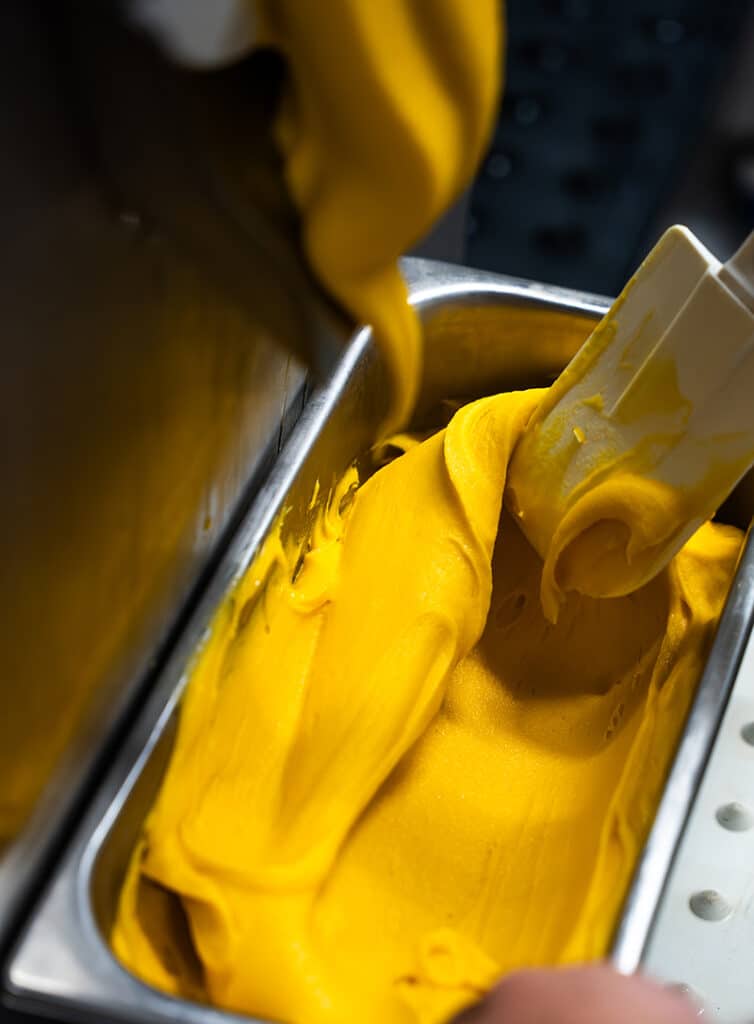
La Fruitière du Val Evel Mango: a blend designed for your creations
The Alphonso variety provides the aroma, while the Chato de Ica adds roundness. Together, they create a well-rounded, stable purée that is ready for immediate use in pastry making, ice cream production, and mixology. It offers a fleshy, vibrant profile, deep color, and consistent quality from one pack to the next.
It pairs beautifully with a wide range of flavors: passion fruit, coconut, ginger, and dark chocolate. Mango lends itself to bold pairings, provided the accompanying ingredients complement rather than overpower it.
La Fruitière du Val Evel mango purée is available in both chilled (HPP) and frozen ranges—with no added sugar—in 1 kg doypacks, as well as 2×5 kg and 10 kg soft pouches.
Need more information? Contact us 🙂